Six months after a stay, “nice campground” is not much help. “Site B12 was level, gravel, pull-through, and close to the bathhouse” is. A useful campground log saves the details you would otherwise have to rediscover.
Start with the facts
- Campground or boondocking location name.
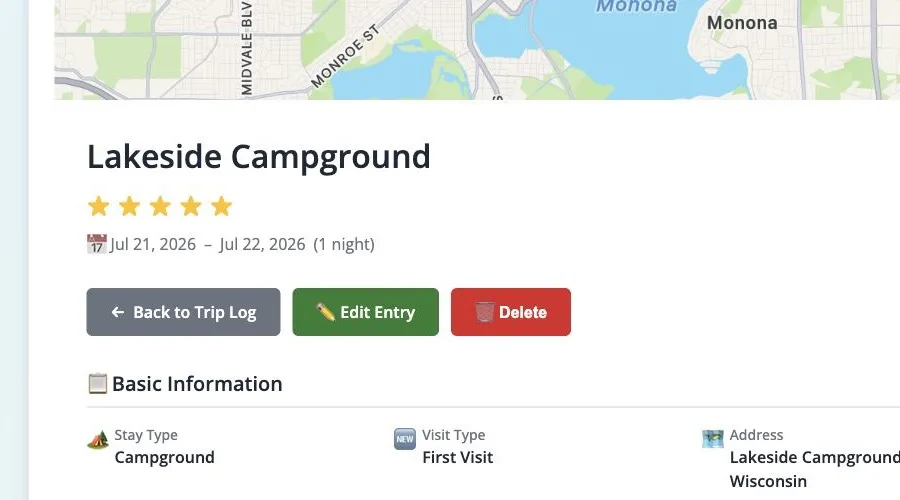
- Check-in and check-out dates.
- Address, state or province, and GPS coordinates when useful.
- Distance traveled and elevation.
- First visit or return visit.
Enter these while the reservation or map is still open. They are simple facts, but they become annoying to reconstruct later.
Describe the site you actually used
- Site number and the site you would request next time.
- Campground type and any membership used.
- Surface and levelness.
- Back-in or pull-through access and whether it was big-rig friendly.
- Electric service, water, sewer, and other available amenities.
- Nightly cost.
The campground may be excellent while one site is a poor fit. Keeping the site number with these details makes the rating useful.
Record connectivity and conditions
RV Log has separate fields for campground Wi-Fi, cellular signal and carrier, and Starlink performance. Weather, water pressure, dark-sky conditions, and the bathhouse or laundry review can stay with the same entry.
Anything that matters but does not have its own field belongs in Notes. One clear sentence is often enough.
Add a rating, note, and a few photos
A rating gives you a quick way to scan past stays. The note explains the rating: “Level pull-through with good Verizon service” is more useful than another paragraph of general description.
Photos can show how the rig fit, where the hookups were, or why the place was memorable. They remain part of the private entry unless you choose to share it.
Write the note you will want next time
Before leaving, answer one question: what should I remember if I book this place again? A site recommendation, access detail, or connectivity result is enough.
See the fields available in the RV Log campground log.